Skip to content

Posts from the ‘Bikes’ Category

last dance

In December 2019, I made one last trip not long before Covid 19 shut down everything. Deep in the trees in the Pacific Northwest, I went to the U.S. cyclocross national championship for VeloNews, a publication that has since disappeared like so many others. It was then, a last dance for all kinds of reasons. Here’s a short story about what I saw out in that muddy field not far from Seattle.

There’s a man pedaling an ancient stationary bike and banging a cymbal with a single drumstick. Somehow, this feels completely normal. So does the unicorn piñata, the light strings hanging from the trees, and the inflatable snowman. A snow machine spits flurries. Also, there’s a bike race.

This is U.S. cyclocross racing, with its near-surreal mix of leg-breaking intensity and track-side shenanigans. My friend and I try to make sense of it. It’s what you do if road racing is too Type A, he says.

But any sport that has room for bacon and dollar hand-ups can’t be all that Type A at all. There’s space for everyone here and a giddy sort of joy. Come as you are. Make it what you want it to be.

If I’d raced bikes in a place like Seattle, Portland, or New England, this might have been my world. Road never suited me, enduro didn’t exist yet. I raced mountain bikes, but looked curiously at this sport that requires to carrying a bike on your back.

Who even does that? Lots of people, as it turns out. A good cyclocross racer is an alchemist at play. Fearless speed, bottomless aerobic capacity, acrobatic bike and running skills: It all seems like some kind of magic.

Read more

the map

He drew me a map, the paper torn from my notebook. We stood over the hood of his white truck, a diesel converted by hand to run on vegetable oil.

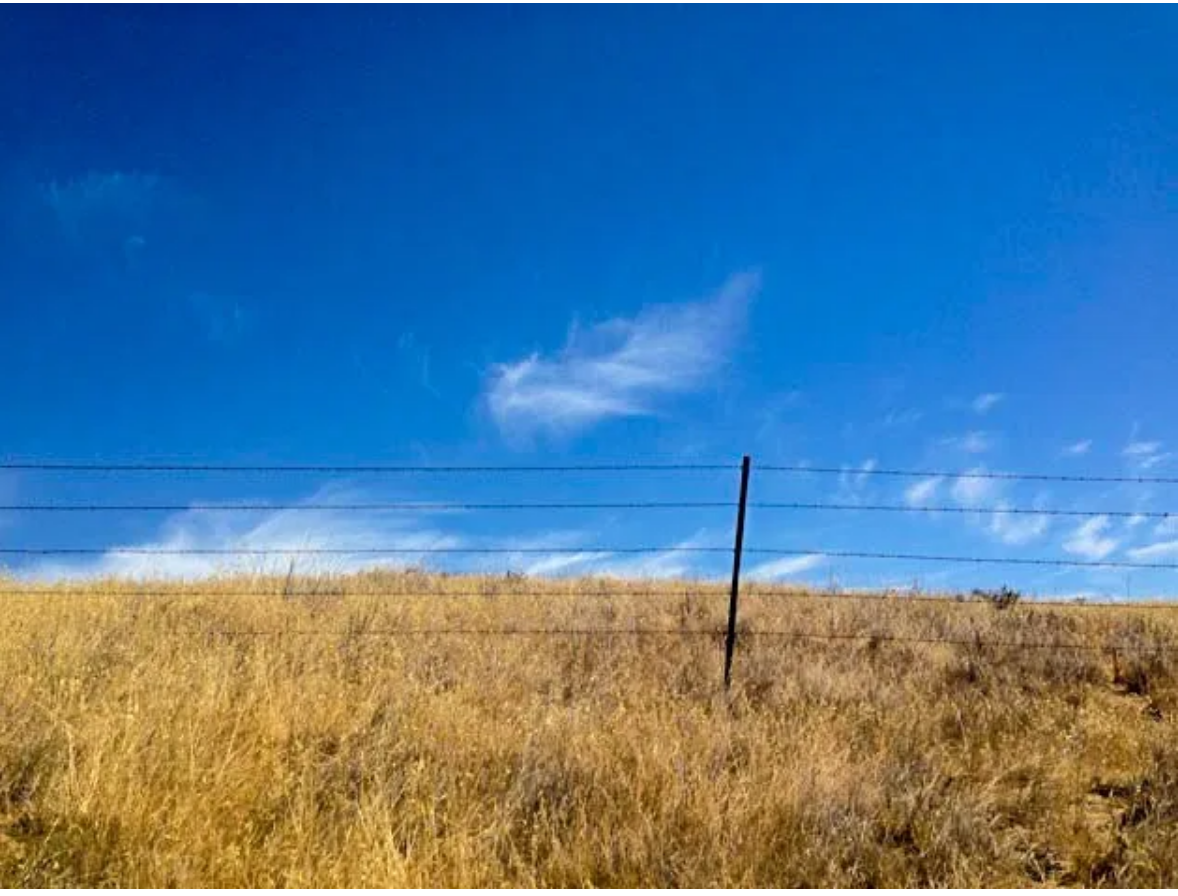
We were stopped by the side of a road running through the cow pastures. The grass gleamed green from the winter’s rains. Only the wind interrupted the silence. The fence lines marched straight until they disappeared over the crest of the hill.

There’s a climb here, he said. Then you descend a short ways and turn left. His pen traced out the switchbacks of the twisting descent and the sharp bend of the turn. In small tidy print, he spelled out the names of the roads. After the schoolhouse, you turn right. 

We had driven the length of the bay. The San Andreas fault runs down the middle and pushes it wider all the time. The west side is moving, slowly inexorably, north.

As we drove he pointed out the landmarks. Here was the boatyard owned by his neighbor. Next came the oyster fisherman. There was the farmhouse dating back five generations.

The wind funnels through the narrow bay pushing up whitecaps and propelling kitesurfers. It’s no place for the faint of heart. Sharks breed in the protected water. He told me a story about bumping into a giant white in a very small boat. They only come in one size, the sharks. They’re only ever giant.

I tucked the map in the front of my bibshorts and followed the fence lines to the first winding climb. The pavement felt heavy, but I had a tailwind. When my phone stopped working, it felt perfectly right. I’d reached the end of the grid, a place where the world was as it always was. I had my precious map, I was off to seek treasure.

Read more

water in the desert

ouch

A few years ago now, my friend Joe Parkin guest-edited Dirt Rag magazine, and he asked me to write a story for it. With Dirt Rag sadly gone and the story likely to disappear into my magazine pile forever before long, I decided to put it here for safekeeping.

This is a story about bikes and friends and recalcitrant trails, and the ways that our worlds collide in ways we never quite expect.

I have included Joe P’s original introduction, because it made me laugh at the time, and it still does. I reproduced this thing from my original file, so any errors belong to me. Don’t blame Joe. He’s totally innocent. The Oxford commas, for example, all mine.

My friend Jen See has a big brain—as in Ph.D. big. Despite that, she writes a lot of stuff about bikes. When she’s not writing about bike-related things, she surfs. A couple of years ago, she gave me a copy of Chas Smith’s Welcome to Paradise, Now Go to Hell, which is a totally awesome read, by the way. [Jen: Heh, that’s where my copy went!] Recently, she went on a media trip that included a trail that I don’t like at all. She didn’t either. Mostly. Though she ended up finding something positive. I asked her to write a piece that felt like Chas Smith [Like I could really ever ghostwrite Chas!] but was still completely Jen See [That part, I can do, for better or worse]. I think she did it. —Joe Parkin

We’d driven out to the desert with mountain bikes and beers, the necessary ingredients for a weekend of trouble making. Up a muddy road, the campsite sat high on a mesa overlooking the torrid landscape of southern Utah. We pitched tents and pulled cactus thorns from our fingers. Clouds billowed overhead, promising a future storm. I didn’t like the look of that, but there wasn’t much I could do about it. Sometimes I regret my life choices.

Read more

bikes are stupid

You’d think by now I’d know better, but it turns out when it comes to bikes and climbing, you never learn. You might get faster, but you never get smarter.

And so when John and I decided to take a day away from our keyboards and internet tethers, I naturally decided we should go ride the Figueroa Mountain Loop, one of the local climbing rides. I’d done it before, but John never had. I’ll admit it right now: It was all my idea.

I wanted to ride to where the world couldn’t reach me. That part was easy. It was getting home that was the hard part.

We packed the bikes in a rented Honda Accord. My secret superpower: packing bikes into rental cars. There was a parking spot in the shade, a sure sign of a lucky day. We changed in the parking lot. The tourists looked confused.

We rolled out at noon, pushed along by a screaming tailwind. We knew eventually we’d pay for that, but for now, we felt giddy like kids let out of school for the day. We were out for a bike ride. We were going to climb some hills. What could possibly go wrong with this?

Read more

dino buzzati’s giro d’italia

A deep cut for my cycling friends, this essay reviews Italian playwright Dino Buzzati’s account of the 1949 Giro d’Italia. It originally appeared as a front of the book piece in Paved Magazine, and it fit the offbeat vibe of the place. If you can by chance find a copy of Buzzati’s book, I highly recommend it. A lengthy review essay like this one is so thoroughly a print artefact, it feels out of place here on the internet. But why the hell not? Words, we can put them anywhere we want, really. Also, history is fun. Let’s make more of it.

***

In 1949, Corriere della Sera sent Dino Buzzati to write about the Giro d’Italia. His daily reports are collected and translated in The Giro D’Italia: Coppi versus Bartali at the 1919 Tour of Italy. A novelist and playwright, Buzzati had never before followed the race. The editors plainly gave him a free hand, because Buzzati did not cover cycling in any normal sense of the word. Read Buzzati’s dispatches in vain for talk of time gaps and race leaders. The stage winner is rarely the lede: This is no straight-up story about a bike race.

Instead, Buzzati’s daily reports read as a series of dreamy, stream of consciousness essays. He is the master of overwriting with a style so wrong, it’s eventually beautifully right. And through the surface chaos, a consistent set of themes become clear over the course of his twenty dispatches from the Giro. Buzzati meditates on what it means to be Italian at that particular moment in history. He dreams in classical mythology and finds ghosts among the ruins. A bike race runs through it all.

Buzzati’s cycling vacation came at the height of one of the sport’s great rivalries. In 1949 Fausto Coppi had twice won the Giro d’Italia while Gino Bartali had three victories in Italy’s grand tour. Legend has portrayed the two riders as stark opposites, a perspective reinforced by the dramatic race reports of the time. Like a photographer peering through a pinhole, cycling’s writers of the 1940s could see only pieces of the whole, so they filled in the gaps with their own inventions.

Read more

skinny dipping

We both saw the lake at exactly the same time. We were just riding along, and suddenly there it was, winking at us through the trees.

It had been a long day. We’d gotten lost on the way to the bike shop — because every ride starts at the bike shop — and we took a wrong turn on the way to the trailhead. We’d spent too much time messing with the bikes. We always spend too much time messing with the bikes.

Also, it was hot. The summer’s heat tasted like dust and smelled like fire. There were trees, but none where we needed them. Why are there never trees on the climbs? This is one of the bike’s great mysteries.

The best rides have an easy cadence to them. You ride, you eat, you banter. You ride some more. When the group separates, you always find each another again. You ride to the big tree, flop in the shade, and swap stories. Remember that one time? Of course you do.

This was not one of those rides. We stopped all the time, but there was no story-telling, just arguing. Which trail to take? We could never decide. Everyone wanted something different. The group split up more times than a ’80’s hair band. We could never find everyone. Tempers frayed.

Read more