Skip to content

water in the desert

ouch

A few years ago now, my friend Joe Parkin guest-edited Dirt Rag magazine, and he asked me to write a story for it. With Dirt Rag sadly gone and the story likely to disappear into my magazine pile forever before long, I decided to put it here for safekeeping.

This is a story about bikes and friends and recalcitrant trails, and the ways that our worlds collide in ways we never quite expect.

I have included Joe P’s original introduction, because it made me laugh at the time, and it still does. I reproduced this thing from my original file, so any errors belong to me. Don’t blame Joe. He’s totally innocent. The Oxford commas, for example, all mine.

My friend Jen See has a big brain—as in Ph.D. big. Despite that, she writes a lot of stuff about bikes. When she’s not writing about bike-related things, she surfs. A couple of years ago, she gave me a copy of Chas Smith’s Welcome to Paradise, Now Go to Hell, which is a totally awesome read, by the way. [Jen: Heh, that’s where my copy went!] Recently, she went on a media trip that included a trail that I don’t like at all. She didn’t either. Mostly. Though she ended up finding something positive. I asked her to write a piece that felt like Chas Smith [Like I could really ever ghostwrite Chas!] but was still completely Jen See [That part, I can do, for better or worse]. I think she did it. —Joe Parkin

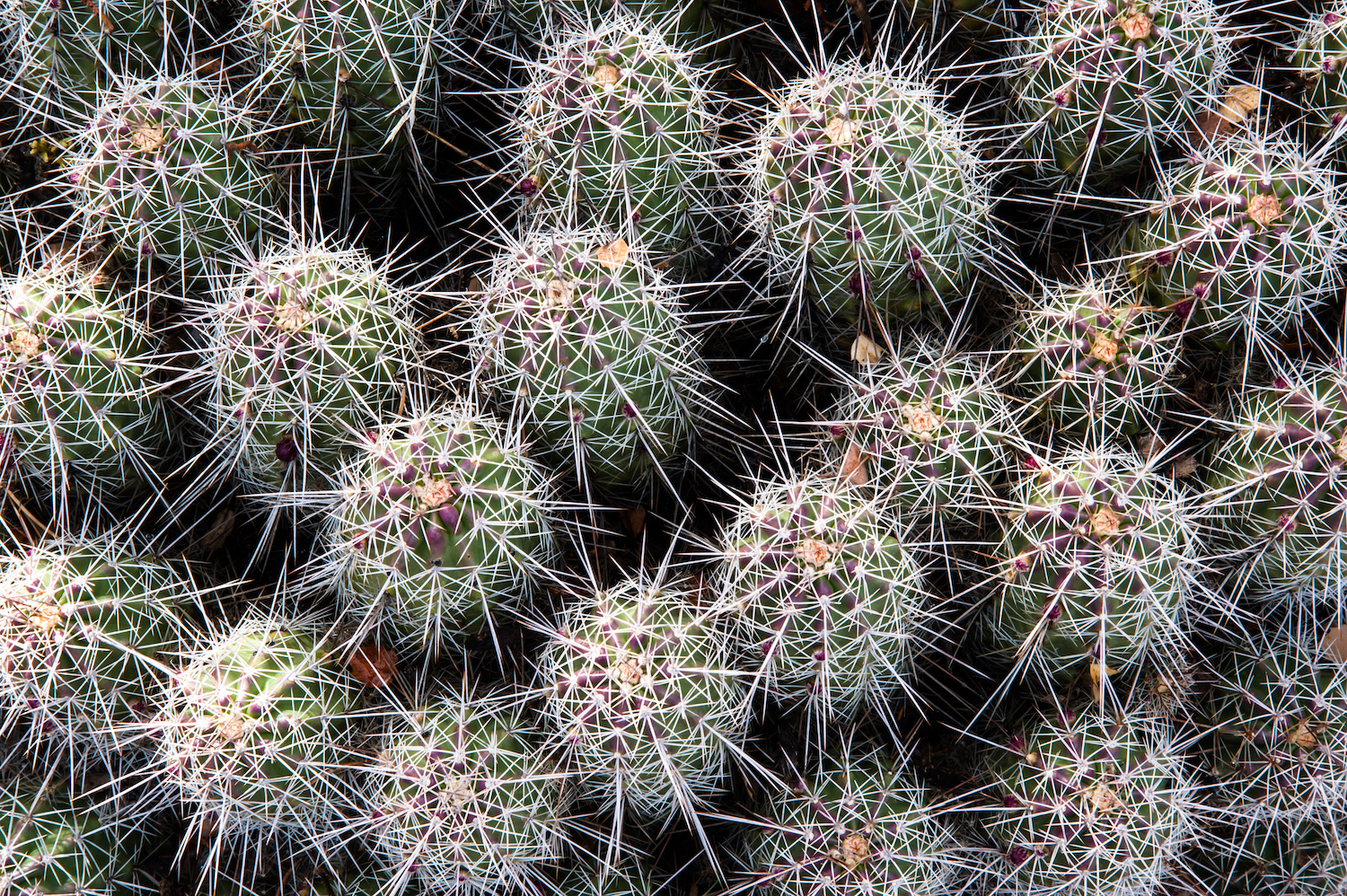
We’d driven out to the desert with mountain bikes and beers, the necessary ingredients for a weekend of trouble making. Up a muddy road, the campsite sat high on a mesa overlooking the torrid landscape of southern Utah. We pitched tents and pulled cactus thorns from our fingers. Clouds billowed overhead, promising a future storm. I didn’t like the look of that, but there wasn’t much I could do about it. Sometimes I regret my life choices.

Read more

sharron weber: the secret surfer

In the late 1960s and early 1970s there came a significant shift in surfing from the stylish noseriding of classic longboarding to the more slashing, vertical turns of the shortboard era. Easily making the transition from longboards to the new, shorter boards, Sharron Weber was one of the stand-out surfers of her era. She won two world championship titles before largely disappearing from view. This is the mostly forgotten story of two-time world surfing champion Sharron Weber. A slightly different version of this story originally ran in The Surfer’s Journal 29.4. I am grateful to Sharron for sharing her story with me in a series of early morning interviews before she headed off to work at The Tire Warehouse in Lihue.

***

On a Sunday afternoon in the early fall of 1972, Sharron Weber won her second world title in San Diego, California. Small lefts rolled through the lineup at the Ocean Beach pier, where locals had nailed the broken pieces of David Nuuhiwa’s favorite board. It was some kind of protest, whose significance no one quite remembers. A crowd watched from the beach as Weber ripped her way to victory on her red, Gerry Lopez-shaped Lightning Bolt.

The plain-spoken owner of a tire store in Lihue, Kauai, Weber was one of the most brilliant surfers of her era. But you would never know it. Unless, that is, you were there.

“She was a big part of this very special period in surfing where surfing was finding a new identity,” said Gerry Lopez. “She was one of the avante-garde.”

Raised in Hawaii, Weber evolved into one of surfing’s innovators, pushing the sport in ever more radical directions. As much as her better-known male peers, Weber embodied the shift from the longboard surfing of the 1960s to the dynamic style of the shortboard era.

In her brief contest career, Weber won six Hawaiian state titles, the 1969 U.S. Championship at Huntington Beach, and the world championships in 1970 and 1972. But by the time Margo Oberg won the first women’s professional world title in 1977, Weber was changing tires at her warehouse. Her time in competitive surfing had already ended.

She is one of the pioneers of women’s surfing. “I’m a secret surfer,” Weber said with her characteristic dry humor. “I’m known in your magazines as not being known.” She shined briefly and brightly. Then she disappeared back into her life, leaving only ripples behind.

Read more

bikes are stupid

You’d think by now I’d know better, but it turns out when it comes to bikes and climbing, you never learn. You might get faster, but you never get smarter.

And so when John and I decided to take a day away from our keyboards and internet tethers, I naturally decided we should go ride the Figueroa Mountain Loop, one of the local climbing rides. I’d done it before, but John never had. I’ll admit it right now: It was all my idea.

I wanted to ride to where the world couldn’t reach me. That part was easy. It was getting home that was the hard part.

We packed the bikes in a rented Honda Accord. My secret superpower: packing bikes into rental cars. There was a parking spot in the shade, a sure sign of a lucky day. We changed in the parking lot. The tourists looked confused.

We rolled out at noon, pushed along by a screaming tailwind. We knew eventually we’d pay for that, but for now, we felt giddy like kids let out of school for the day. We were out for a bike ride. We were going to climb some hills. What could possibly go wrong with this?

Read more

dino buzzati’s giro d’italia

A deep cut for my cycling friends, this essay reviews Italian playwright Dino Buzzati’s account of the 1949 Giro d’Italia. It originally appeared as a front of the book piece in Paved Magazine, and it fit the offbeat vibe of the place. If you can by chance find a copy of Buzzati’s book, I highly recommend it. A lengthy review essay like this one is so thoroughly a print artefact, it feels out of place here on the internet. But why the hell not? Words, we can put them anywhere we want, really. Also, history is fun. Let’s make more of it.

***

In 1949, Corriere della Sera sent Dino Buzzati to write about the Giro d’Italia. His daily reports are collected and translated in The Giro D’Italia: Coppi versus Bartali at the 1919 Tour of Italy. A novelist and playwright, Buzzati had never before followed the race. The editors plainly gave him a free hand, because Buzzati did not cover cycling in any normal sense of the word. Read Buzzati’s dispatches in vain for talk of time gaps and race leaders. The stage winner is rarely the lede: This is no straight-up story about a bike race.

Instead, Buzzati’s daily reports read as a series of dreamy, stream of consciousness essays. He is the master of overwriting with a style so wrong, it’s eventually beautifully right. And through the surface chaos, a consistent set of themes become clear over the course of his twenty dispatches from the Giro. Buzzati meditates on what it means to be Italian at that particular moment in history. He dreams in classical mythology and finds ghosts among the ruins. A bike race runs through it all.

Buzzati’s cycling vacation came at the height of one of the sport’s great rivalries. In 1949 Fausto Coppi had twice won the Giro d’Italia while Gino Bartali had three victories in Italy’s grand tour. Legend has portrayed the two riders as stark opposites, a perspective reinforced by the dramatic race reports of the time. Like a photographer peering through a pinhole, cycling’s writers of the 1940s could see only pieces of the whole, so they filled in the gaps with their own inventions.

Read more

skinny dipping

We both saw the lake at exactly the same time. We were just riding along, and suddenly there it was, winking at us through the trees.

It had been a long day. We’d gotten lost on the way to the bike shop — because every ride starts at the bike shop — and we took a wrong turn on the way to the trailhead. We’d spent too much time messing with the bikes. We always spend too much time messing with the bikes.

Also, it was hot. The summer’s heat tasted like dust and smelled like fire. There were trees, but none where we needed them. Why are there never trees on the climbs? This is one of the bike’s great mysteries.

The best rides have an easy cadence to them. You ride, you eat, you banter. You ride some more. When the group separates, you always find each another again. You ride to the big tree, flop in the shade, and swap stories. Remember that one time? Of course you do.

This was not one of those rides. We stopped all the time, but there was no story-telling, just arguing. Which trail to take? We could never decide. Everyone wanted something different. The group split up more times than a ’80’s hair band. We could never find everyone. Tempers frayed.

Read more

ghost in the machine

They drove into the woods in a van with suspect wiring, the night black among the trees, the passing landscape a blind country. At their last stop, the van hadn’t started. They’d sat, dumbfounded, until suddenly, it had roared to life. They really had no idea what was wrong with it or why, as if on a whim, it had chosen to turn on again. Their minds had already been far ahead down the road, chasing the vanishing horizon.

They’d left California earlier that same day, but it seemed like they’d traveled several times around the sun in the course of that single long day of gas, food, and yet one more coffee stop. Coffee fueled their progress and their laughter down the arrow straight interstate, “the 5,” in the peculiar parlance of Californians, whose intimate relationship with their freeways is both unique and necessary.

The 5 runs north-south the length of California, passing through Oregon and Washington, and until it eventually reaches British Colombia, mountain biking’s promised land. Traveling north, the freeway follows the gentle upward tilt of the Central Valley. It feels intuitively right that we should travel uphill when heading north up the map and the Central Valley obliges. The climb is imperceptible, though, and out the window of the van, it’s all flat farmland as far as the eye can see.

Then the terrain changes. Suddenly they were into the southern Cascades under the panopticon gaze of Shasta’s hollowed out peak. The van wallowed through the curves like a ship in heavy seas and soon enough, they discovered that the brakes didn’t do a hell of a lot. They shimmied between big rigs and campervans, swapping non-stop stories the way mountain bike people do. There was that one time — the cadence of anticipation echoed through the stories as they hurtled northward up the highway.

Read more