Skip to content

Posts from the ‘Surf’ Category

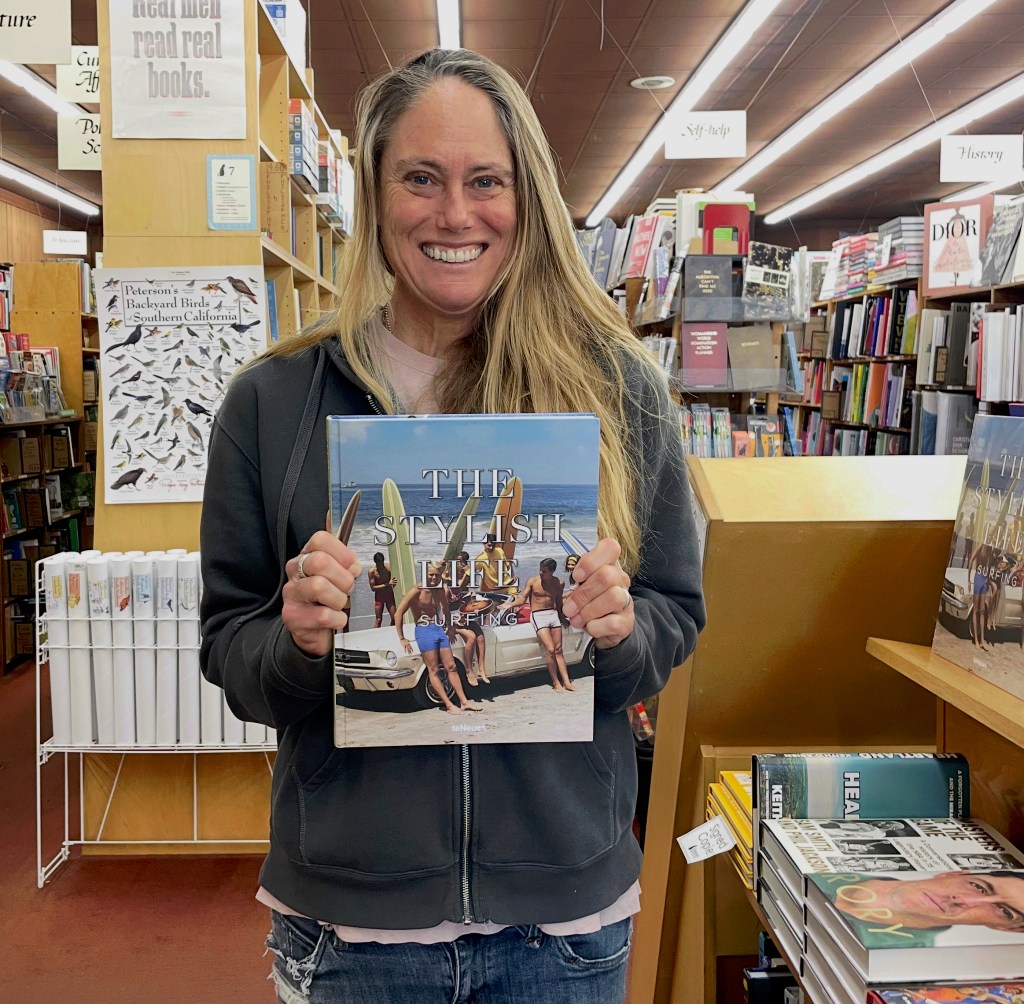
the stylish life: surfing

“Surfing is an intricate dance on water, perpetually in motion. A good surfer reads the ocean’s moods and perceives its every movement, often before anything happens at all. There are signs everywhere if you know how to look for them. The draw of surfing is the challenge, sure. But it’s also a form of self-expression. Get up on a wave and you can do whatever you want. It’s part sport, part art, and pure fun.” — Introduction to The Stylish Life: Surfing

It’s alive! I wrote a coffee table book about surfing for the publisher, Te Neues. There are so many fun images in this thing, y’all! I am very excited to see it out in the world, including on the shelves of my favorite book store, Chaucer’s here in Santa Barbara.

Here’s how to buy a copy + sample pages from the Te Neues site. Thanks for the support xoxox

Info + Sample Pages | Chaucer’s Books | Bookshop.org | Amazon.com

postcard

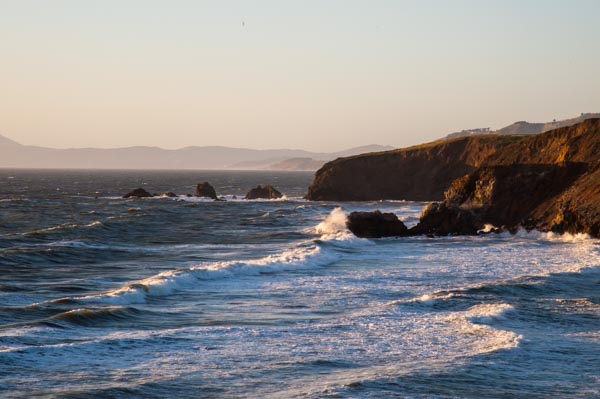
Rocky beach with surf at sunset in Pacifica, California

I wrote this short essay for Wildsam Magazine to serve as an introduction to a feature on roadtripping through California’s surf towns. I have spent some time in such places, as you all know. They are a whole vibe, though each has its own flavor.

Exit West. Gas. Food. Lodging. An archipelago of towns runs the length of the California coast, connected by a tangle of freeways and yet, existing a world apart from them. Start in San Diego and follow the Pacific Coast Highway north. White sand and easy turns wild and rugged. Palm trees give way to cypress, pines, and redwoods. Each town has its own personality, but all along the way, the ocean is ever-present in all its shifting moods. Life dances to the rhythm of the tides.

In the early 20th century, Duke Kahanamoku brought surfing to California, but it remained for films like the 1959 classic Gidget to rocket surfing into the mainstream. Once there, it never left. Board maker Hobie Alter opened California’s first surf shop in Dana Point in 1954, and before long, just about every town on the coast had its own shop and local board label. With their boards tucked under their arms, Californians headed to the beach and a whole way of life evolved around their newfound obsession.

When the waves turn on, the rhythm changes. Before sunrise, the line runs around the block at the coffee shop and blocks the sidewalk outside the tacqueria that’s serving up breakfast burritos. Traffic crawls along the PCH. Heads hang out car windows, staring at the waves and searching for that elusive parking spot. Boards slide out of cars, wetsuits tug into place. Hurry, gotta get out there. Swell lines stretch to the horizon, and surfers jostle for the best waves like a pack of hungry seagulls on a bag of chips.

All too soon, the wind comes up and the tide drains out. Sandy toes slide hastily into shoes and socks, and head off to the day job. Whatever it takes to stay right here and live this life.
When the sun sinks toward the horizon and transforms the salt spray to golden haze, it all feels like a dream.

And maybe it is.

Profile: Matt Warshaw

Surf historian Matt Warshaw spends his days in Seattle sifting through the ruins of our strange and beautiful past time. He says he’s motivated by an effort to assign meaning to his own story and to understand why he’s spent so many hours of life obsessed with riding waves. How did he arrive here? Matt learned to surf in Venice Beach with Jay Adams, competed in the first Katin Pro/Am, edited Surfer Magazine — and that was just the beginning.

In 2022, I wrote a profile of Matt for the print magazine Emocean. The story appeared in the magazine’s fourth issue, Devotion. It was a joy to work with the crew at Emocean, who love surfing and making print media as much as anyone I’ve ever met. You can check out their current issues available at emocean.surf. Here’s the story of Matt’s life-long fascination with surfing.

When Matt Warshaw was six years old, there were three things he wanted to be: the driver of a drag racing car, a drummer in a band, and a surfer. One day his Uncle Daniel came to visit and brought his Hansen longboard. At the time, Warshaw and his family lived in the San Fernando Valley and they had a backyard pool. Uncle Daniel put his board in the pool and told Warshaw to sit on it. Then he pushed it across the pool. On the third trip across the pool, Uncle Daniel told Warshaw to stand up. “In my mind, I was a surfer.”

Read more

big thursday

I cruise down the beach and pass through a parking lot littered with sand and kelp, the sure signs of a high tide and a big swell. Normally, there aren’t really even waves on this part of the beach. I look out to overhead sets, brown with churned up sand. Even from the beach, I can see how the long period swell is moving water deep beneath the surface. It’s anything but playful.

A pair of guys walk down the beach carrying Wavestorms under their arms. I laugh. Where there’s a wave, there’s a Wavestorm. They look excited and optimistic. The Harvest buoy off Point Conception reads 23.3ft, 18 seconds, 283 degrees. The ocean laughs at your optimism.

“We are all the idiots,” my friend writes in a text. “We just don’t know it until our luck runs out.”

Read More at Beachgrit.

the fabulous and ridiculous adventures of surfline man

Hapless yet determined, annoying yet impossible to hate, Surfline Man loves surfing more than anything else in life. He reads every last forecast like it’s truth and he spends so many hours thinking about surfing. More, in fact, than he spends actually doing it. Surfline Man knows what’s up, and has many opinions which he’ll share with you at length. But he’s also the most stoked guy you’ll ever meet. Surfing, it’s like his favorite thing!

Yes, of course he drives a Sprinter van. And yes, he bought the red fins, because the looked cool, not because they would actually work with his board. He can’t help but buy every latest and greatest piece of gear in the hope that somehow this one thing will make his life complete. You see how it is.

Here is the full archive of Surfline Man’s fabulous and ridiculous adventures over at Beachgrit, where he was born and continues to live out his days.

***

It all began one fateful day: I did not know it was a Surfline Day, when untold hordes come crawling out from every nook and cranny. There is surf today! Everyone go surfing! Omg! And, obediently, Surfline Man and all his besties go surfing. — Surfline Man: An Anthropological Study

Read more

sharron weber: the secret surfer

In the late 1960s and early 1970s there came a significant shift in surfing from the stylish noseriding of classic longboarding to the more slashing, vertical turns of the shortboard era. Easily making the transition from longboards to the new, shorter boards, Sharron Weber was one of the stand-out surfers of her era. She won two world championship titles before largely disappearing from view. This is the mostly forgotten story of two-time world surfing champion Sharron Weber. A slightly different version of this story originally ran in The Surfer’s Journal 29.4. I am grateful to Sharron for sharing her story with me in a series of early morning interviews before she headed off to work at The Tire Warehouse in Lihue.

***

On a Sunday afternoon in the early fall of 1972, Sharron Weber won her second world title in San Diego, California. Small lefts rolled through the lineup at the Ocean Beach pier, where locals had nailed the broken pieces of David Nuuhiwa’s favorite board. It was some kind of protest, whose significance no one quite remembers. A crowd watched from the beach as Weber ripped her way to victory on her red, Gerry Lopez-shaped Lightning Bolt.

The plain-spoken owner of a tire store in Lihue, Kauai, Weber was one of the most brilliant surfers of her era. But you would never know it. Unless, that is, you were there.

“She was a big part of this very special period in surfing where surfing was finding a new identity,” said Gerry Lopez. “She was one of the avante-garde.”

Raised in Hawaii, Weber evolved into one of surfing’s innovators, pushing the sport in ever more radical directions. As much as her better-known male peers, Weber embodied the shift from the longboard surfing of the 1960s to the dynamic style of the shortboard era.

In her brief contest career, Weber won six Hawaiian state titles, the 1969 U.S. Championship at Huntington Beach, and the world championships in 1970 and 1972. But by the time Margo Oberg won the first women’s professional world title in 1977, Weber was changing tires at her warehouse. Her time in competitive surfing had already ended.

She is one of the pioneers of women’s surfing. “I’m a secret surfer,” Weber said with her characteristic dry humor. “I’m known in your magazines as not being known.” She shined briefly and brightly. Then she disappeared back into her life, leaving only ripples behind.

Read more